Chaîne de production de géotextiles
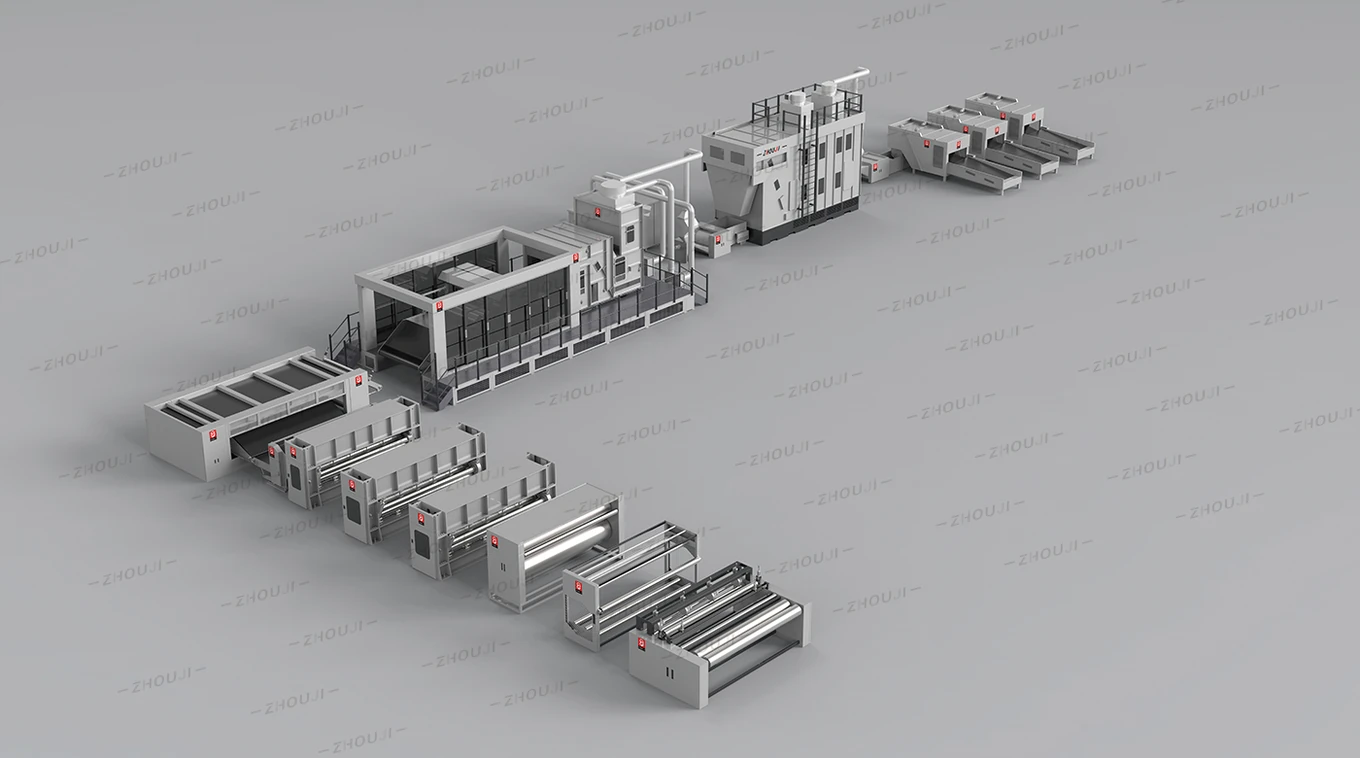
ZHOU JI provides complete geotextile production lines for infrastructure, road, railway, drainage and environmental engineering. The line combines fiber opening, blending, carding, crosslapping and needle punching to produce strong, uniform nonwoven geotextile, configured around raw material, target GSM, working width and output. Suitable for PET / polyester, PP / polypropylene and recycled PET fibers.
Solution fit
Configured around the finished geotextile, not just a machine list.
Icnonwoven reviews raw material, GSM, working width, required output and downstream finishing before recommending the machine configuration.
PET needle punched geotextile
Polyester nonwoven geotextile for road, railway, drainage, filtration and civil engineering applications.
PP needle punched geotextile
Polypropylene geotextile for durable, lightweight and chemically resistant nonwoven applications.
Recycled PET geotextile
Needle punched geotextile made from recycled polyester where recycled content is part of the specification.
Heavy-duty engineering geotextile
Higher-GSM geotextile for demanding civil engineering requiring increased thickness, strength and stability.
Technical specifications
Parameters are a proposal starting point.
Final specifications depend on fiber type, product GSM, working width, required output and finished geotextile requirements.
Fiber Opening → Blending → Carding → Crosslapping → Needle Punching → Finishing → Winding.
Opening & blending
PET, PP or recycled polyester fibers are opened and evenly blended for a stable fiber supply.
Carding & crosslapping
The fibers are carded into a uniform web and crosslapped to build the required weight, width and thickness.
Needle punching
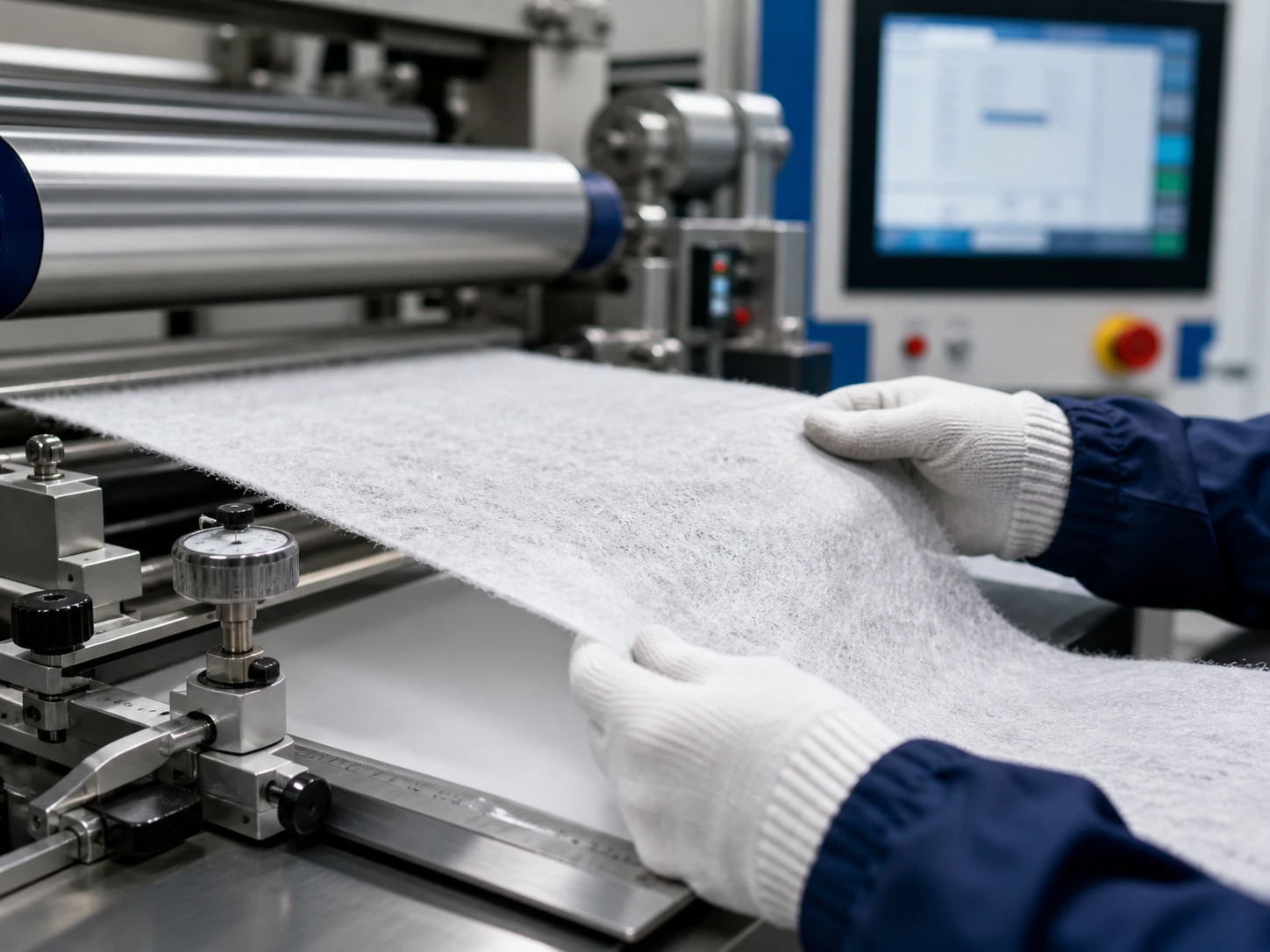
Repeated needle penetration mechanically entangles the fibers; needling is set by weight, thickness and strength.
Finishing & winding
Optional heat setting or coating is added, then the geotextile is wound into rolls for transport or processing.
FAQ
Common questions before requesting a line proposal.
The answers below help buyers prepare the right project information before discussing equipment configuration, factory layout and delivery support.
A typical line includes a bale opener, fiber opener, big hopper blender, pneumatic feeder, carding machine, cross lapper, batt feeder, geotextile needle punching machines and winding equipment. Heat setting and coating can be added.
Yes. The same line can be configured as a PET geotextile production line or a polypropylene geotextile production line by adjusting fiber preparation, web formation and needle punching parameters.
Yes. A recycled PET geotextile line can be configured according to the recycled fiber characteristics, target GSM, working width and finished product requirements.
The reference configuration covers approximately 100–2000 gsm. The final range depends on raw material, line speed, web formation and needle punching configuration.
The reference line can be configured for working widths up to 8,500 mm, depending on the selected carding, crosslapping, needle punching and downstream equipment.
Cost mainly depends on working width, target GSM, required output, raw material, number and type of needle punching machines, automation level and downstream finishing.
Other solutions
Explore other nonwoven production line solutions.
Every published solution appears here automatically.
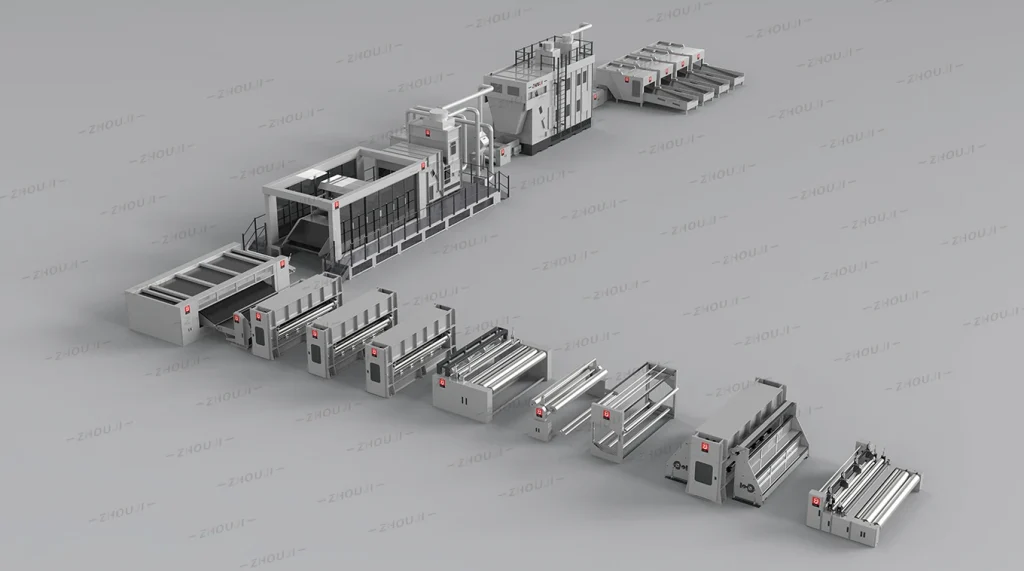
Automotive Interior Nonwovens Production Line
Complete automotive interior nonwoven line for molded carpet, underfelt and acoustic felt in PET, PP, PA and recycled PET.
View solution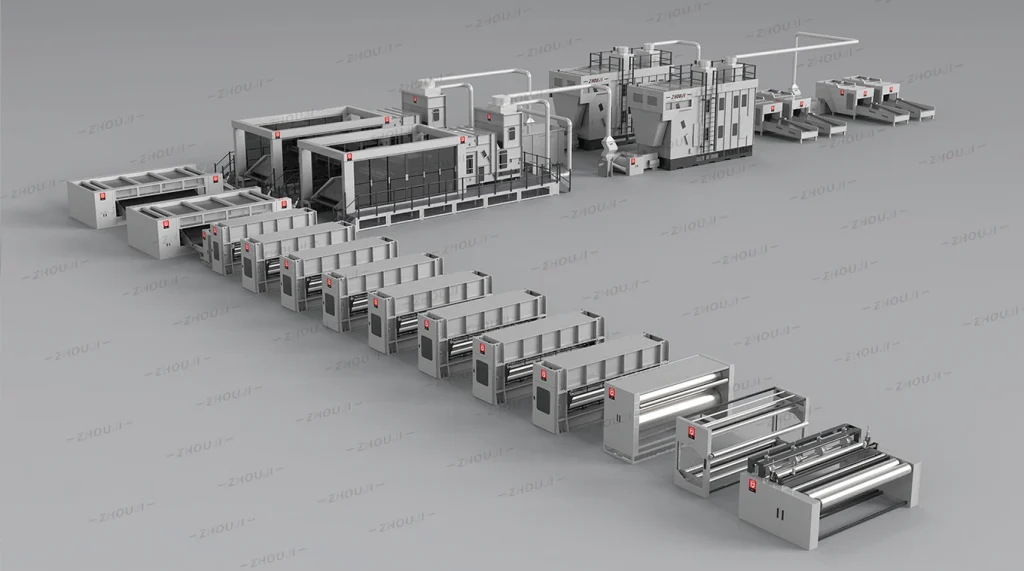
Filter Felt Needle Punching Production Line
Complete filter felt needle punching production line for PET, PP and industrial filter media — opening, carding, crosslapping, needling and winding.
View solution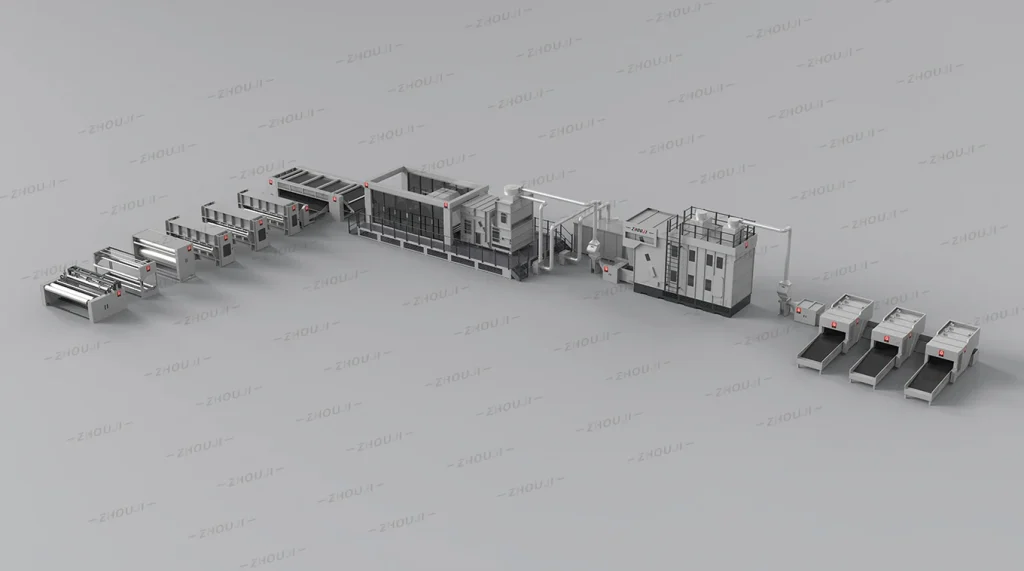
Nonwoven Carpet Production Line
Complete needle punched nonwoven carpet production line for residential, hotel, office and commercial flooring, with optional PU / PVC backing.
View solution