
Synthetic Leather Substrate Production Line
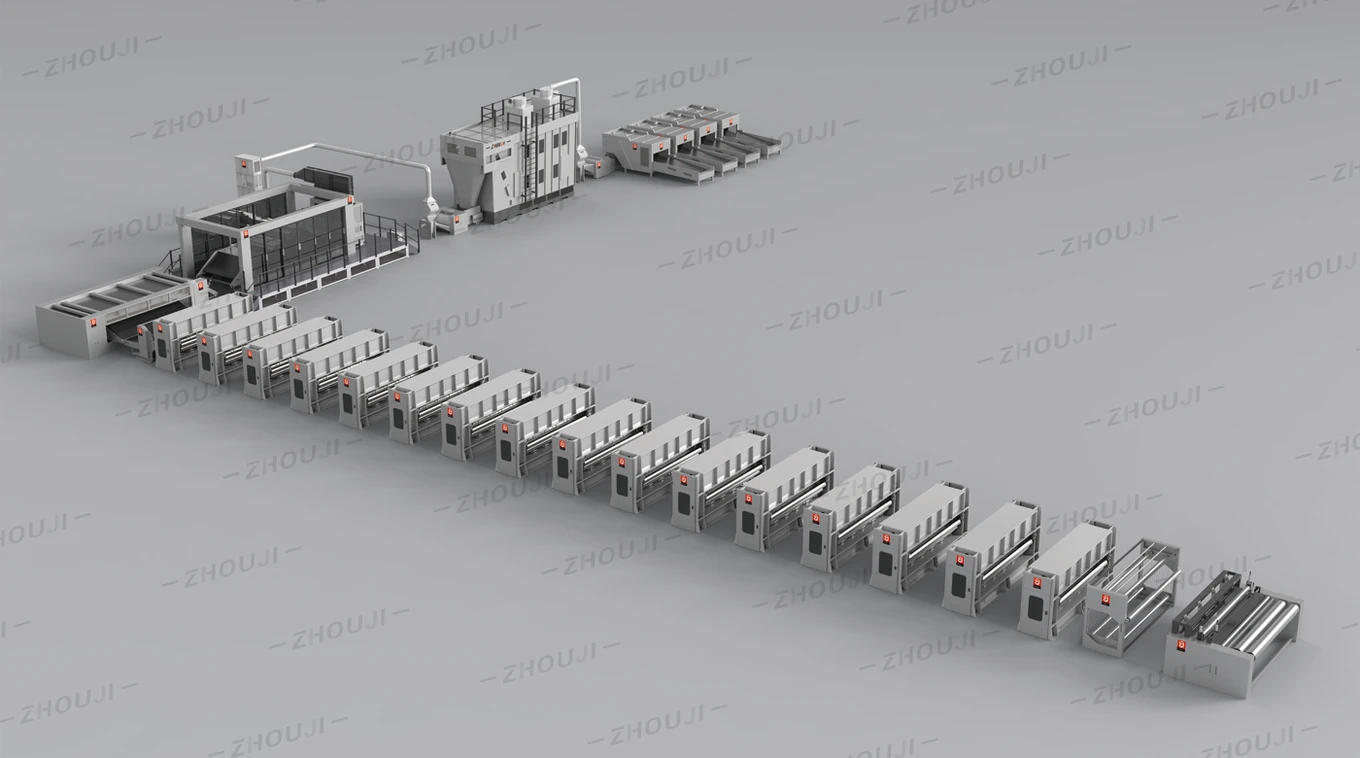
ZHOU JI provides complete synthetic leather substrate production lines for needle punched nonwoven base fabrics used in microfiber leather, PU / PVC synthetic leather and artificial leather. The line covers fiber opening, blending, carding, web formation and multi-stage needle punching, configured around the fiber system, substrate weight, working width, apparent density and surface flatness. It can be adapted to island-type and other fine-fiber systems.
Solution fit
Configured around the finished leather substrate, not just a machine list.
Icnonwoven reviews raw material, GSM, working width, required output and downstream finishing before recommending the machine configuration.
Microfiber leather base fabric
Dense needle punched nonwoven base fabric for microfiber synthetic leather, providing a stable structure for impregnation and finishing.
Island-type microfiber substrate
Substrate from island-type microfiber systems for high-density microfiber leather; multi-stage needling builds the 3D fiber structure.
PU / PVC synthetic leather substrate
Needle punched base fabric for PU or PVC coating, impregnation and other artificial leather processes.
Synthetic leather backing fabric
Nonwoven backing material requiring consistent thickness, strength and dimensional stability.
Technical specifications
Parameters are a proposal starting point.
Final specifications are determined by the fiber system, required substrate structure and finished synthetic leather application.
Fiber Opening → Blending → Carding → Web Formation → Multi-Stage Needle Punching → Inspection → Winding.
Opening & blending
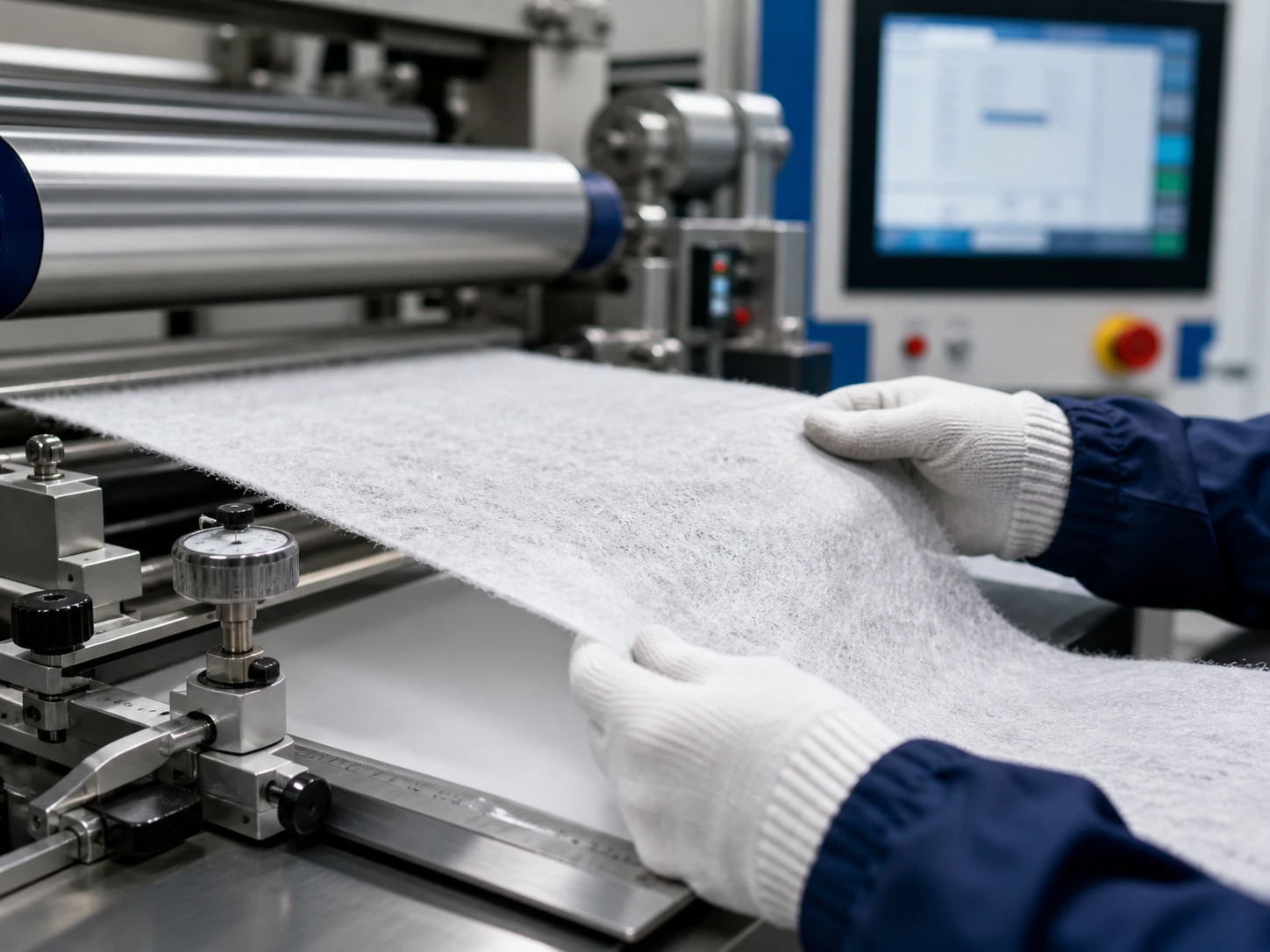
Polyester, island-type microfiber or other fibers are opened and blended for a consistent fiber supply.
Carding & web formation
The fibers are carded into a uniform web and formed to the required basis weight, width and thickness.
Multi-stage needle punching
Several needling stages build a dense 3D fiber network; direction, density and intensity are set by substrate requirements.
Inspection & winding
The substrate is checked for weight uniformity, thickness and surface, then wound for downstream leather processing.
FAQ
Common questions before requesting a line proposal.
The answers below help buyers prepare the right project information before discussing equipment configuration, factory layout and delivery support.
It produces the nonwoven base fabric used before coating, impregnation and other synthetic leather processes. Main stages include fiber opening, blending, carding, web formation and multi-stage needle punching.
A dense nonwoven substrate made from fine or microfiber-based fibers. Needle punching forms a three-dimensional fiber network that provides the structure for subsequent microfiber leather processing.
A single needling stage may not provide enough entanglement for a dense substrate. Multi-stage needling gradually reinforces the web and controls density, strength, thickness and surface condition.
Opposed or staggered needling entangles fibers from different directions to develop a denser, more stable 3D structure — suitable for microfiber base fabric requiring high structural stability.
Yes. The process can be configured for island-type microfiber systems used in high-density microfiber synthetic leather substrate production, depending on fiber characteristics and required structure.
Basis-weight uniformity, thickness consistency, surface flatness, apparent density, fiber entanglement and structural stability — influenced by fiber preparation, carding, web formation and needle punching settings.
Other solutions
Explore other nonwoven production line solutions.
Every published solution appears here automatically.
Automotive Interior Nonwovens Production Line
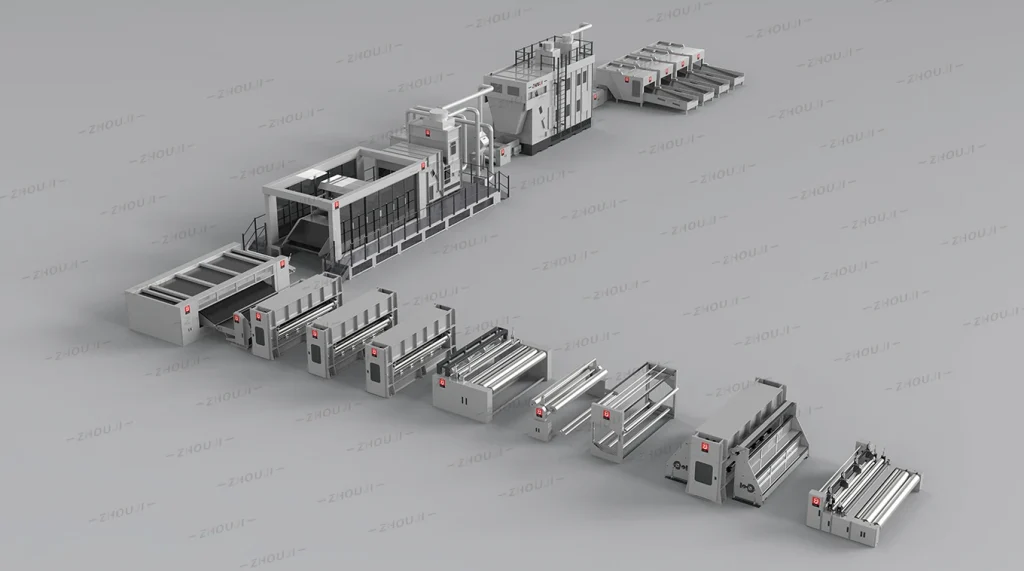
Complete automotive interior nonwoven line for molded carpet, underfelt and acoustic felt in PET, PP, PA and recycled PET.
View solution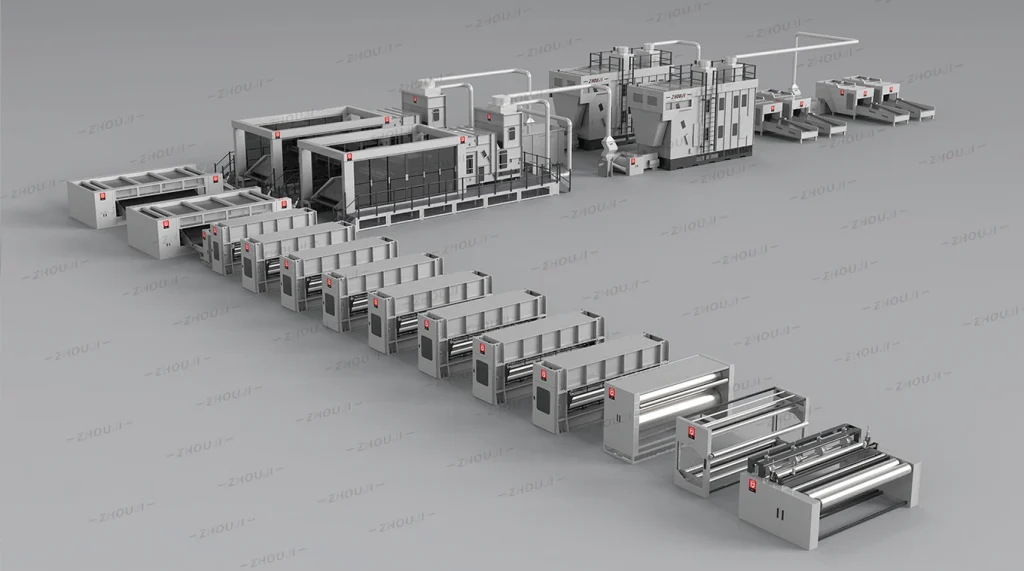
Filter Felt Needle Punching Production Line
Complete filter felt needle punching production line for PET, PP and industrial filter media — opening, carding, crosslapping, needling and winding.
View solution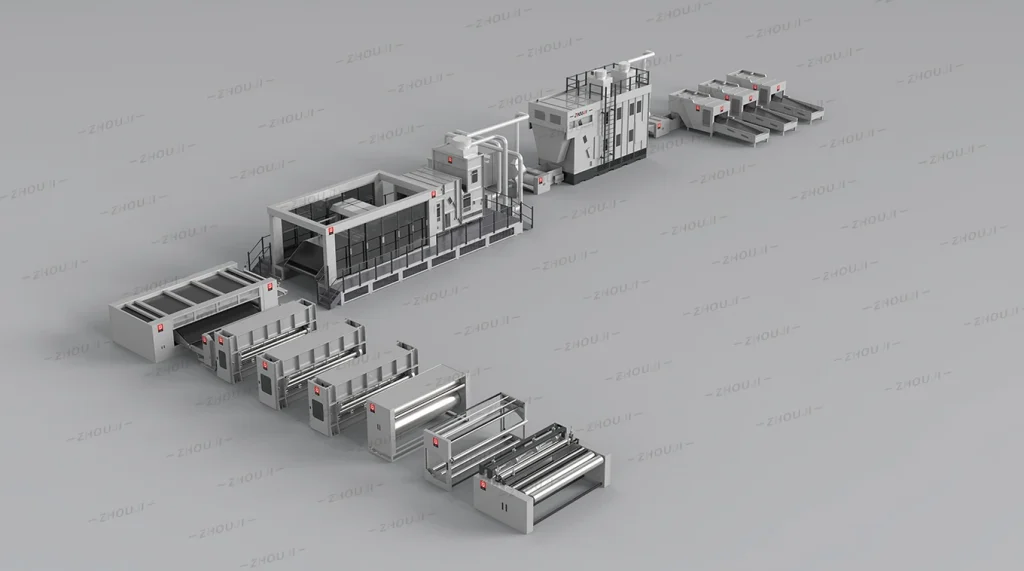
Geotextile Production Line
Complete needle punched geotextile production line for PET, PP and recycled PET — opening, carding, crosslapping, needling and winding.
View solution